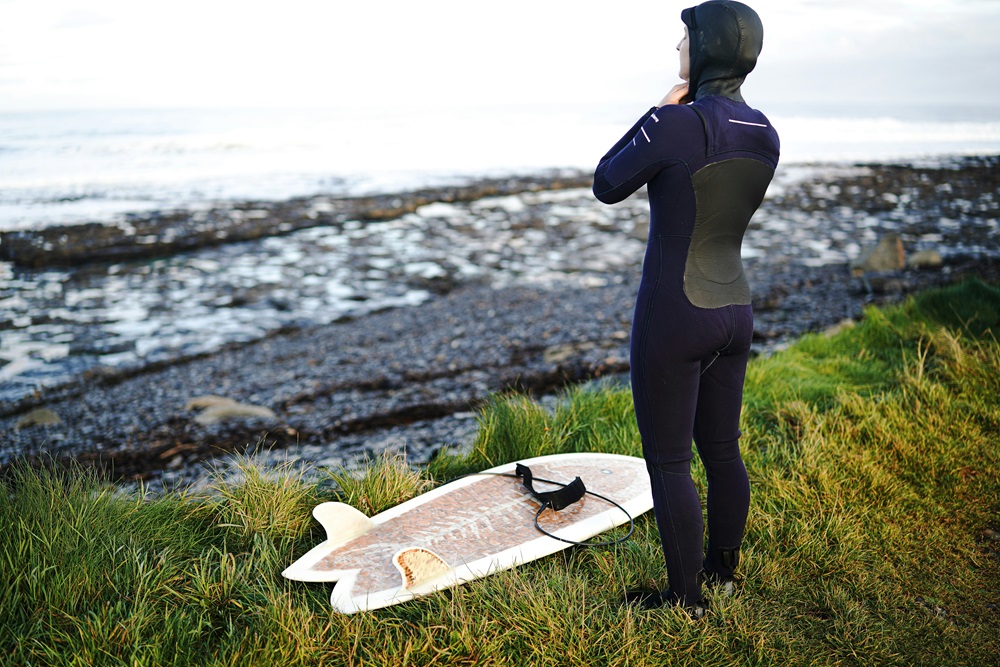
Does Your Used Wetsuit Really Fit?
Buying a secondhand wetsuit can save you a lot of money – a decent wetsuit runs anywhere from $150 to $400 new, so finding used wetsuits near me through local listings or shops makes real financial sense.
But a wetsuit that doesn’t fit right is worse than useless. Too loose and it floods with cold water. Too tight and you can’t breathe properly after 20 minutes in the water.
Here’s how to actually tell if it fits before you buy.
Does It Feel Like a Second Skin or Like a Bag?
A well-fitting wetsuit should feel like compression clothing – snug all over, with no loose areas or air pockets you can pinch. If you can grab and pull the neoprene away from your thighs, lower back, or chest, that wetsuit is too big for you.
The neoprene needs to stay in contact with your skin at all times. The way a wetsuit works is through a thin layer of water that gets trapped between the suit and your skin, which your body then heats up.
If there’s too much space, cold water keeps flushing through instead of warming up – and that defeats the whole purpose.
Most manufacturers design wetsuits to fit within about 10 to 15 pounds and a few inches of height. If you’re at the edge of a size chart, fit in person matters more than the label.
How Much Should Your Movement Be Restricted?
Your movement should feel slightly resisted, but never blocked. When you raise both arms straight above your head, you shouldn’t feel like the suit is pulling you back down hard.
A little resistance is normal – that’s the neoprene stretching. But if you feel genuine strain across your shoulders just from lifting your arms, the suit is too small or too stiff in the upper body.
Do a full squat while wearing it. The suit should follow your legs without the lower back section pulling down or the knees bunching up with excess material.
Shoulder fit is the most important check on a used wetsuit. Surfers and swimmers report that shoulder tightness causes fatigue faster than almost anything else – and in cold water, that’s a real safety concern, not just a comfort issue.
What Do Air Gaps at the Neck and Wrists Tell You?
Air gaps at the neck, wrists, or ankles mean the suit will flush with cold water the moment you get in. Run two fingers along the collar while wearing it. You should barely fit them in. If your whole hand slides in easily, cold water will pour in every time a wave hits you.
Wrist and ankle seals work the same way. These entry points are where most heat loss happens in an ill-fitting suit.
Research on cold water immersion suggests that even a 2-degree drop in core temperature starts affecting physical coordination – so a leaky seal is more than just uncomfortable.
On a used wetsuit specifically, check if the neck seal has stretched out over time. Neoprene loses elasticity with heavy use, and a collar that fit the previous owner well might now be permanently stretched wider than it should be.
Used Wetsuits Near Me: What to Check Before You Hand Over Money
When you’re buying secondhand, the fit check goes hand in hand with a condition check. Look at the seams along the shoulders, underarms, and crotch – these are the high-stress zones that blow out first.
Compressed or cracked neoprene in these areas means the suit won’t insulate properly even if the size is right for you.
A wetsuit with delaminating neoprene – where the outer layer starts to separate from the inner – is not worth buying at any price. You can spot this as a bubbling or wrinkling texture on the surface that doesn’t smooth out when you press it.
Also check the zip. A corroded or stiff zip on a back-entry suit is a major inconvenience, but a broken zip on a chest-entry suit can make the whole suit unwearable.
FAQs
How tight should a wetsuit feel across the chest?
Firm but not painful. You should be able to take a full deep breath without the chest panel stopping you. If your breathing feels shallow or forced within a minute of putting it on, the chest is too tight. Over a long swim or surf session, that kind of restriction causes real fatigue.
Can you alter a used wetsuit that’s slightly too big?
Not really in any practical way. Neoprene isn’t easy to tailor and most stitching repairs are temporary. If it’s more than one size off, move on and find a better fit.
Does wetsuit thickness affect how it feels on the body?
Yes. A 5mm wetsuit will feel much stiffer than a 3mm suit, especially at the shoulders and knees. If you’re testing fit in a shop, keep in mind that thicker suits need a slightly different movement check – you expect more resistance, but the snugness rules still apply the same way.
How do you check if a used wetsuit has too much wear?
Stretch the neoprene between both hands in a few spots across the suit. Healthy neoprene springs back quickly. If it stays stretched or feels thin and papery, the foam cells inside have compressed from heavy use and won’t insulate the way they should.
Is it okay to buy a used wetsuit without trying it on first?
It’s a real gamble. Sizing varies quite a bit between manufacturers, and a used suit may have stretched or compressed unevenly from how the previous owner stored or used it. If you can, always try it on – which is another reason searching for used wetsuits near me makes more sense than ordering blind online.