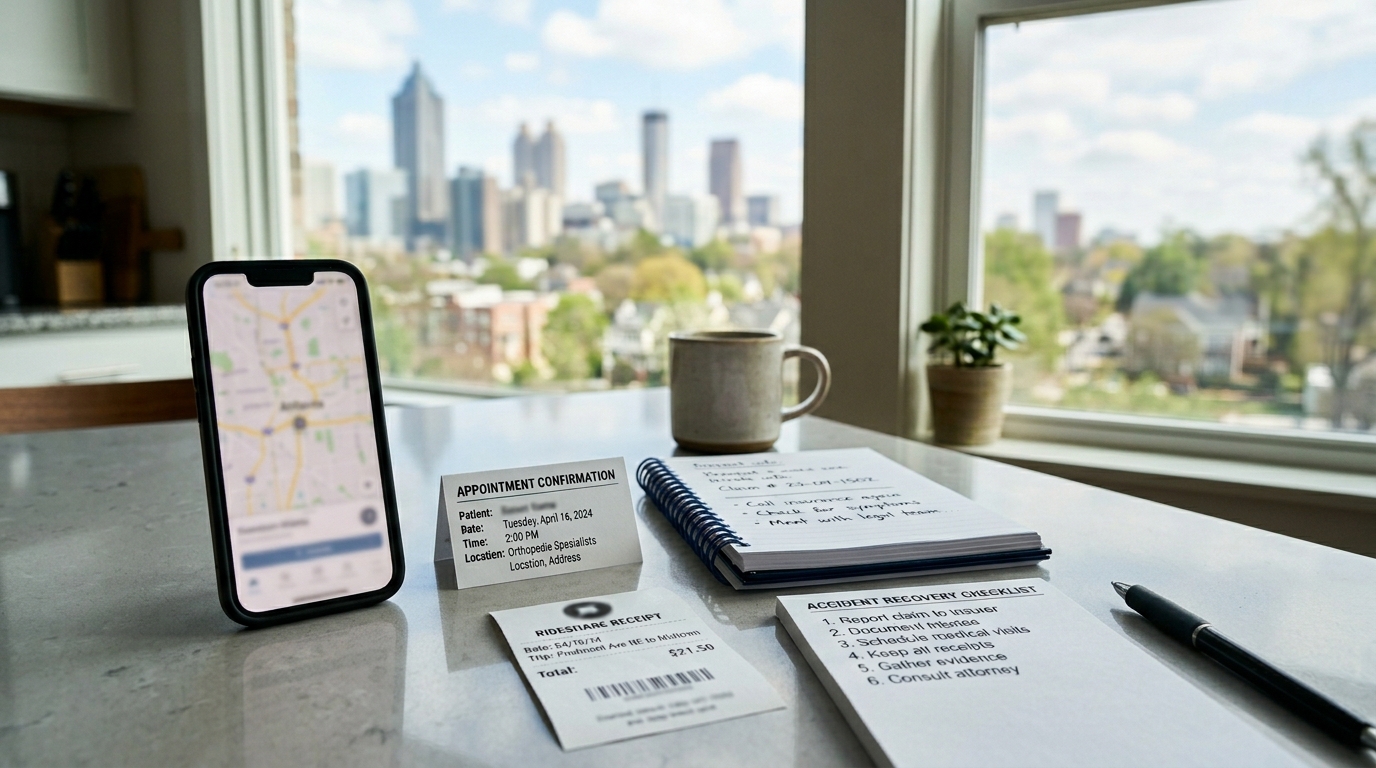
Atlanta Accident Recovery Resources: What to Do After an Injury
Recovering after an accident in Atlanta can involve more than medical treatment. Injured people may also need to manage insurance calls, transportation problems, missed work, repair estimates, pain that appears days later, and questions about whether a legal claim may exist. This resource explains practical recovery steps for people injured in car crashes, rideshare accidents, truck collisions, pedestrian incidents, unsafe property accidents, and other serious injury situations in Atlanta.
Quick Answer
After an accident in Atlanta, focus first on medical care and safety. Then begin organizing records that may affect your recovery and any potential claim, including photos, medical records, police or incident reports, insurance messages, witness details, repair estimates, receipts, and proof of missed work. Avoid accepting a quick settlement before you understand the full impact of the injury.
If the accident caused serious injuries, disputed fault, insurance delays, or lost income, speaking with an atlanta personal injury lawyer may help you understand what evidence matters, what deadlines apply, and how to avoid common claim mistakes. People looking for local profile details can also review the Thompson Law Atlanta business listing for map access and location information.
Key Takeaways
- Accident recovery may involve medical treatment, insurance communication, transportation issues, wage documentation, and legal deadlines.
- Atlanta accidents may happen on interstates, local roads, rideshare routes, pedestrian-heavy areas, MARTA access points, parking lots, commercial properties, and construction zones.
- Useful recovery documentation may include medical records, photos, witness details, police reports, incident reports, insurance letters, receipts, and missed-work records.
- Insurance companies may review treatment timelines, fault evidence, statements, medical documentation, and prior injuries before making a settlement offer.
- Georgia injury claims are time-sensitive, so injured people should avoid waiting too long to preserve evidence or ask questions.
Why Accident Recovery Can Be Difficult in Atlanta
Atlanta is a busy metro area with heavy commuter traffic, rideshare activity, commercial vehicles, construction projects, event traffic, tourists, pedestrians, and cyclists. Accidents can happen on I-285, I-75, I-85, I-20, the Downtown Connector, Peachtree Street, Piedmont Avenue, Memorial Drive, Northside Drive, parking lots, apartment complexes, hotels, restaurants, retail centers, and entertainment districts.
The Atlanta Department of Transportation’s Vision Zero program tracks serious injuries and fatalities on city roads and uses crash data to help guide roadway safety decisions. That local safety focus matters because serious accidents can affect more than transportation. They can disrupt health, income, family responsibilities, mobility, and daily routines.
For many injured people, the recovery process creates immediate questions:
- Where should I get medical care?
- Should I call police or file an incident report?
- What should I say to the insurance company?
- How do I document missed work?
- What if pain gets worse later?
- What if the other party blames me?
- Should I accept the insurance company’s offer?
- How long do I have to make a claim?
A simple recovery plan can make the next steps easier to manage.
Step 1: Get Medical Care and Follow Treatment Instructions
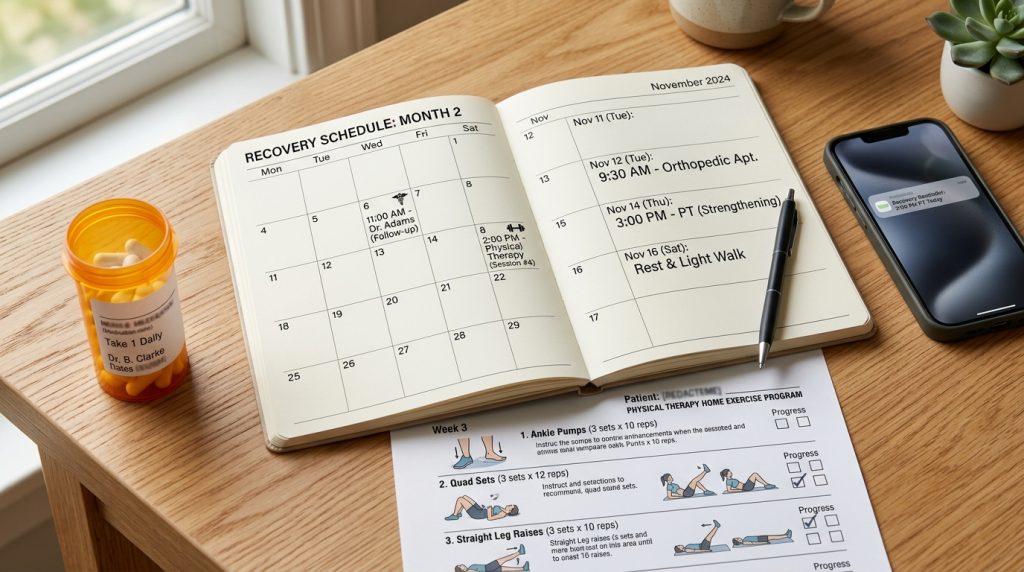
Medical care should be the first priority after any serious accident. Some injuries are obvious right away, while others develop over hours or days. Neck pain, back pain, headaches, dizziness, numbness, shoulder pain, knee injuries, and concussion symptoms may not fully appear at the scene.
Prompt medical treatment helps in two ways. First, it protects your health. Second, it creates documentation showing when symptoms began and what treatment was recommended.
After an accident, try to keep records of:
- Emergency room visits
- Urgent care visits
- Primary care appointments
- Specialist referrals
- Imaging results
- Physical therapy notes
- Prescription medication
- Medical bills
- Discharge instructions
- Work restrictions
Follow-up care matters. If a doctor recommends physical therapy, imaging, specialist evaluation, or time away from work, missing appointments can slow recovery and may also give an insurance company a reason to question the claim.
Step 2: Report the Accident When Appropriate
The type of report depends on how the accident happened.
For a motor vehicle crash, police may respond and create a crash report. For an injury at a store, apartment complex, hotel, restaurant, or event venue, there may be an incident report. For a work-related injury, there may also be employer reporting requirements.
A report can help document:
- Date and time
- Location
- Parties involved
- Witnesses
- Initial statements
- Vehicle or property details
- Reported injuries
- Officer or manager observations
Even when a report does not prove everything, it can create a useful record that may help later.
Step 3: Organize Insurance Information
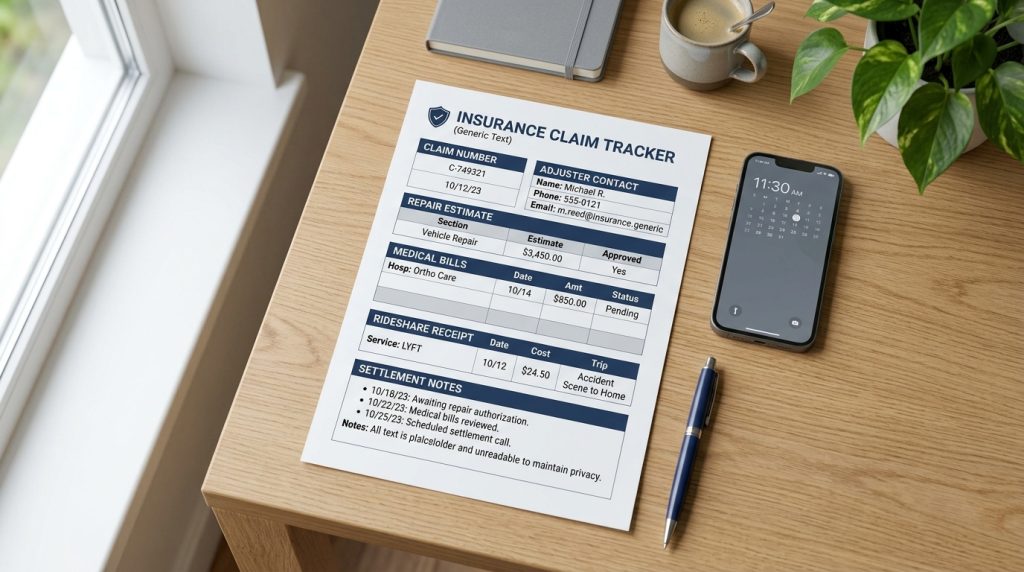
Insurance communication can become confusing quickly. You may hear from your own insurer, the other party’s insurer, a property insurer, a commercial policy representative, a rideshare insurance representative, or a claims adjuster.
Keep a folder with:
- Claim numbers
- Adjuster names
- Phone numbers
- Email addresses
- Policy information
- Letters from insurance companies
- Settlement offers
- Medical authorization forms
- Recorded statement requests
- Vehicle repair communications
- Property damage estimates
Be careful with broad statements. Avoid guessing about speed, distance, fault, visibility, pain levels, or injury severity. If you do not know an answer, it is better to say so than to speculate.
Step 4: Document the Scene and Preserve Evidence
Evidence can disappear quickly after an accident. Vehicles are repaired, hazards are cleaned up, surveillance footage is overwritten, and witnesses become harder to contact.
Helpful evidence may include:
- Photos of the accident scene
- Photos of visible injuries
- Photos of vehicle damage or property hazards
- Witness names and phone numbers
- Police or incident report numbers
- Dashcam footage
- Surveillance footage
- Repair estimates
- Damaged property
- Weather or lighting details
- Notes about what happened before and after the accident
If the accident happened at a business, apartment complex, parking lot, hotel, restaurant, or event venue, nearby cameras may have recorded what happened. Asking about video early can be important because many systems overwrite footage after a short period.
Step 5: Track Expenses and Lost Income
Accident recovery often creates costs that build over time. Some are obvious, like emergency room bills or vehicle repairs. Others are easier to miss, such as transportation costs, prescription expenses, medical devices, or time away from work.
Track expenses such as:
- Medical bills
- Prescription costs
- Physical therapy costs
- Medical equipment
- Vehicle repairs
- Rental car charges
- Towing and storage fees
- Rideshare or transportation costs
- Parking for medical appointments
- Home assistance costs
- Childcare needed because of appointments
- Missed wages
- Reduced hours
- Lost freelance or contract income
If your injury affects your ability to work, keep pay stubs, employer letters, timesheets, tax records, or written confirmation of missed shifts.
Step 6: Keep a Recovery Journal
A recovery journal does not need to be complicated. A few notes each day or week can help document how the injury affects normal life.
You can track:
- Pain levels
- Sleep problems
- Mobility limitations
- Medication side effects
- Missed family activities
- Difficulty driving
- Trouble lifting, walking, standing, or sitting
- Emotional stress
- Missed work
- Medical appointments
- Changes in symptoms
This can be especially helpful when injuries are not visible in photos. Pain, reduced mobility, fatigue, and emotional distress can be difficult to explain months later without notes.
Step 7: Be Careful Before Accepting a Settlement
Insurance companies may offer a settlement before the full medical picture is clear. A quick offer can feel helpful when bills are arriving, but it may not include future medical care, lost earning ability, long-term pain, or complications that appear later.
Before accepting a settlement, consider:
- Is medical treatment complete?
- Are future appointments expected?
- Do you know whether the injury is temporary or permanent?
- Have all bills been received?
- Have lost wages been calculated?
- Are there future work restrictions?
- Does the offer include pain and suffering?
- Are there medical liens or unpaid balances?
- Will signing a release close the claim permanently?
Once a release is signed, it may be difficult or impossible to ask for more money later.
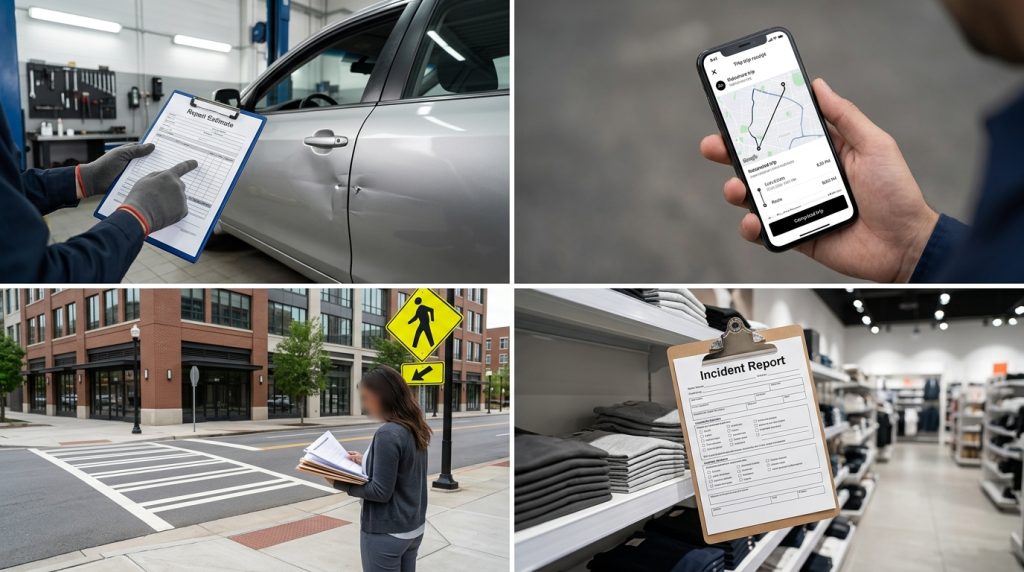
Local Recovery Challenges After an Atlanta Accident
Accident recovery can look different depending on where and how the injury happened.
Interstate and Freeway Crashes
Crashes on I-285, I-75, I-85, I-20, or the Downtown Connector may involve high speeds, multiple vehicles, commercial trucks, rideshare vehicles, or lane-change disputes.
Rideshare Accidents
Atlanta rideshare accidents may happen near Hartsfield-Jackson Atlanta International Airport, hotels, nightlife areas, event venues, universities, downtown, Midtown, or Buckhead. Insurance questions may depend on whether the driver was logged into the app, waiting for a ride, traveling to pick up a passenger, or actively transporting someone.
Commercial Property Injuries
Falls or injuries at stores, apartment complexes, hotels, restaurants, parking garages, or entertainment venues may involve property maintenance records, surveillance footage, incident reports, and witness statements.
Pedestrian and Bicycle Injuries
Pedestrian and bicycle accidents may involve visibility, crosswalks, traffic signals, lighting, driver distraction, road design, transit stops, and nearby camera footage.
Truck and Commercial Vehicle Accidents
Truck accidents may involve driver logs, maintenance records, company safety policies, cargo information, inspection records, and multiple insurance policies.
Construction and Worksite-Adjacent Accidents
Some accidents near construction zones or worksites may involve contractors, subcontractors, traffic control plans, equipment operators, or third-party companies.
When Legal Guidance May Be Useful
Not every accident requires legal help. However, legal guidance may be useful when the accident causes more than minor inconvenience.
Consider speaking with a lawyer if:
- You needed emergency care
- You were hospitalized
- You missed work
- Medical treatment is ongoing
- Fault is disputed
- The insurance company is blaming you
- The insurer is delaying or denying the claim
- A commercial vehicle was involved
- A rideshare vehicle was involved
- A pedestrian, cyclist, motorcyclist, or child was injured
- The accident happened on unsafe property
- The settlement offer seems too low
- A loved one suffered a fatal injury
A lawyer may help identify responsible parties, gather records, handle insurance communication, evaluate damages, and explain legal deadlines.
Georgia Deadlines Can Affect Recovery Decisions
Georgia personal injury claims are controlled by legal deadlines. In many cases, actions for injuries to the person must be brought within two years after the right of action accrues under Georgia Code Section 9-3-33.
That does not mean an injured person should wait. Evidence may disappear quickly, and insurance negotiations can take time. Some cases may involve shorter notice requirements, especially if a government vehicle, public employee, or public entity is involved.
Georgia law can also reduce or bar recovery according to the injured person’s percentage of fault under Georgia Code Section 51-12-33. This is why evidence matters when the insurance company argues that the injured person shares blame.
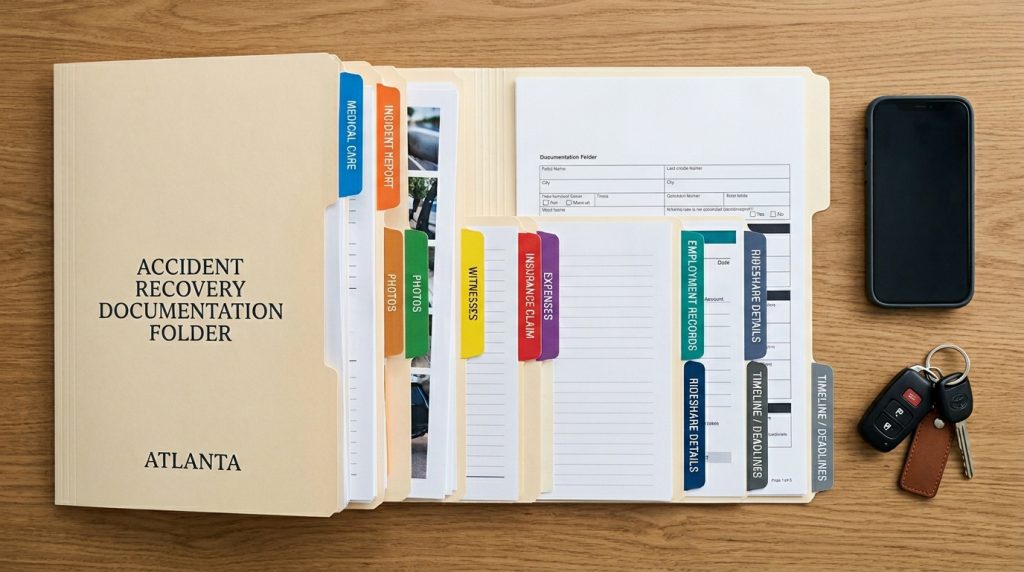
Atlanta Accident Recovery Checklist
Use this checklist to stay organized after an accident:
- Get medical care as soon as possible
- Follow treatment instructions
- Save all medical records and bills
- Report the accident when appropriate
- Get the police or incident report number
- Take photos of the scene, damage, and injuries
- Collect witness names and contact details
- Save all insurance emails, letters, and claim numbers
- Keep receipts for accident-related expenses
- Track missed work and reduced hours
- Write down symptoms and daily limitations
- Avoid posting accident details on social media
- Be careful with recorded statements
- Do not sign a settlement release too quickly
- Ask about legal deadlines early
FAQ
What should I do first after an accident in Atlanta?
Get medical care first if you are injured. Then report the accident when appropriate, document the scene, collect witness information, and begin saving medical and insurance records.
Do I need a police report after every accident?
Not every situation requires a police report, but one can be helpful when someone is injured, fault is disputed, a vehicle is badly damaged, a driver leaves the scene, or intoxication is suspected.
What records should I keep after an accident?
Keep medical records, bills, photos, report numbers, witness details, insurance messages, repair estimates, receipts, proof of missed work, and notes about symptoms or daily limitations.
Should I talk to the insurance adjuster?
You may need to communicate basic facts, but be careful with recorded statements, broad medical authorizations, or settlement discussions before you understand the full impact of the injury.
What if my pain gets worse days after the accident?
Delayed symptoms are common. You should seek medical care and explain when the accident happened and when symptoms began. Medical documentation can be important if you later need to make a claim.
How long does accident recovery take?
Recovery depends on the type of injury, treatment plan, medical history, and daily demands. Some people recover in weeks, while others need months of treatment or long-term care.
Can I still bring a claim if I was partly at fault?
Possibly, but Georgia fault rules can reduce or prevent recovery depending on the percentage of fault assigned. Evidence is especially important when fault is disputed.
What if the accident involved a rideshare driver?
Rideshare accidents may involve additional insurance questions. Coverage can depend on the driver’s app status at the time of the crash, so trip details and insurance records may be important.
Is this resource legal advice?
No. This article is for general informational purposes only. Anyone dealing with a specific injury claim should speak with a qualified legal professional about their situation.
Final Thoughts
Accident recovery in Atlanta can involve medical care, insurance communication, financial pressure, and legal uncertainty. A practical recovery plan can help injured people stay organized and avoid rushed decisions.
The most important steps are to protect your health, document the accident, preserve evidence, track expenses, understand insurance communications, and ask about deadlines before too much time passes.