Huaxue Gongcheng: Advancing Sustainable Chemical Engineering in China
The modern industrial world is at a pivotal crossroads. As nations grapple with the pressing realities of climate change and resource depletion, the manufacturing sector must pivot away from high-emission, fossil-fuel-dependent workflows. This global transition requires a complete re-engineering of how we process raw materials, manage thermal energy, and recycle resources. At the heart of this eco-industrial revolution is the discipline of Huaxue Gongcheng the Chinese domain of Chemical Engineering.
In China, Huaxue Gongcheng has evolved from a traditional discipline focused on heavy industrial expansion into a highly sophisticated engine for sustainable manufacturing. Backed by world-class academic institutions, strategic national initiatives, and breakthrough industrial research, the field is driving green innovation on a global scale. This comprehensive article explores how sustainable innovations, process optimization, digital transformations, and advanced safety standards in China are redefining chemical engineering for a circular economy.
The Strategic Importance of Huaxue Gongcheng in China’s Green Transition
As the world’s largest producer of chemicals, China plays a decisive role in the global transition to clean manufacturing. The country’s commitment to achieving peak carbon dioxide emissions by 2030 and full carbon neutrality by 2060 (the “dual carbon” targets) has fundamentally reshaped the academic and industrial targets of Huaxue Gongcheng.
Historically, chemical plants operated under linear economic models: raw feedstocks were processed, products were extracted, and massive amounts of thermal energy and chemical waste were discharged. Today, chemical engineering research in China focuses on building circular loops.
Modern processing facilities are designed to eliminate waste entirely by capturing carbon, recycling wastewater, and utilizing renewable energy sources. This transition is backed by prestigious, peer-reviewed journals such as Huaxue Gongcheng (Chemical Engineering) and the Journal of Chemical Engineering of Chinese Universities, which regularly publish pioneering methodologies for lowering process footprints and maximizing reaction yields.
Sustainable Chemical Engineering Innovations: Redefining Processing
Transitioning to green manufacturing requires rewriting the fundamental rules of chemical synthesis. Traditional pathways often demand extreme pressures and high temperatures, which consume immense amounts of energy. Modern chemical engineering in China is circumventing these challenges through several key breakthroughs.
Green Catalysis and Single-Atom Catalysts
Catalysis dictates the speed, temperature, and efficiency of chemical reactions. By introducing advanced catalysts, engineers can drastically lower the energy threshold required for complex molecular transformations.
Chinese research labs are globally recognized for pioneering single-atom catalysts (SACs). By anchoring isolated, individual metal atoms onto stable support structures, these catalysts achieve near-$100\%$ molecular selectivity. This means the reaction produces only the intended product, completely eliminating hazardous side reactions and chemical waste.
Biomass Conversion and Bio-Refining
To reduce dependency on petroleum, Huaxue Gongcheng is shifting focus toward bio-based feedstocks. Advanced biorefineries across China are converting agricultural residues, forestry waste, and municipal organic waste into high-value chemical precursors. This process utilizes engineered enzymes and microbial cultures to depolymerize complex organic matter at room temperature, offering a direct, carbon-neutral alternative to traditional fossil-based petrochemicals.
Process Optimization: Batch Operations vs. Modern Continuous-Flow Systems
Achieving true sustainability requires optimizing every step of the manufacturing pipeline. One of the most significant shifts in process technology is the transition from batch manufacturing to continuous-flow operations.
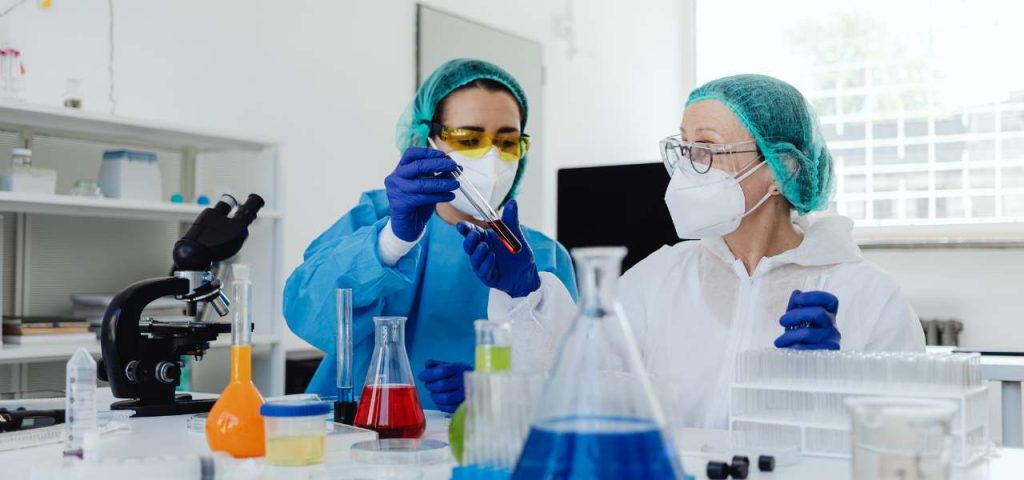
While batch processing remains flexible for small-scale operations, it is inherently energy-intensive and produces high thermal variance. Modern chemical engineering relies on continuous-flow systems, where reactions take place in automated, highly integrated microfluidic channels.
To illustrate this structural shift, the table below compares traditional processing methods with modern continuous-flow solutions:
| Operational Parameter | Traditional Batch Processing | Modern Continuous-Flow Systems |
| Energy Consumption | High peaks due to cyclic heating and cooling of large vessels | Low and steady; utilizes integrated heat exchangers to recycle thermal energy |
| Product Consistency | Subject to batch-to-batch variations in temperature and mixing | Exceptionally high uniformity due to micro-controlled environments |
| Material Footprint | Massive holding tanks and extensive physical land area | Ultra-compact, modular reactor configurations |
| Chemical Safety | Large volumes of highly volatile chemicals stored under pressure | Minimal active volumes within the active flow line at any one time |
Environmental Protection: Advanced Wastewater Management and CCUS
Industrial chemical manufacturing requires massive volumes of water and energy, making pollution control a primary focus for modern process engineers.
Advanced Oxidation and Resource Recovery
Industrial wastewater contains complex organic pollutants that municipal treatment plants cannot break down. Chinese researchers, such as those at the Southern University of Science and Technology, are developing novel electrochemical and photochemically driven processes to selectively recover critical elements from saline water and industrial runoff.
These advanced oxidation technologies utilize solar energy to break down toxic synthetic molecules into benign water and carbon dioxide, while simultaneously reclaiming valuable trace metals like lithium, nickel, and cobalt from urban mines and industrial waste.
Carbon Capture, Utilization, and Storage (CCUS)
Through innovative CCUS processes, China is turning carbon emissions into valuable economic assets. Instead of treating carbon dioxide ($CO_2$) solely as greenhouse gas waste to be stored underground, chemical engineers are building highly active electrochemical cells that turn captured $CO_2$ back into clean fuels, biodegradable polymers, and industrial synthesis gases.
Digital Transformation: AI, IoT, and Digital Twins
The integration of advanced digital technologies is transforming chemical engineering from a physical science into an information-driven discipline. Modern smart factories throughout China utilize artificial intelligence (AI), Internet of Things (IoT) sensors, and cloud computing to monitor and optimize operations in real time.
By deploying thousands of IoT sensors across distillation columns, heat exchangers, and chemical reactors, engineers can feed a continuous stream of live data into a virtual simulation of the facility—known as a Digital Twin.
Machine learning algorithms analyze these data points to predict mechanical wear, optimize reactant ratios, and dynamically adjust heating elements. This predictive capability prevents unplanned shutdowns, reduces emergency flaring, and ensures that the facility constantly operates at peak thermodynamic efficiency.
Academic Leadership and Future Trends in China
The rapid development of Huaxue Gongcheng is fueled by world-class academic institutions across China. Universities like Tsinghua University, Tianjin University, and East China University of Science and Technology are globally renowned for their engineering research. These institutions work in close partnership with industrial giants to ensure that laboratory-scale breakthroughs—such as micro-chemical reactors and green hydrogen systems—are successfully commercialized.
As the industry looks to the future, several emerging trends will define the landscape of chemical engineering:
- Electrification of Industrial Reactors: Replacing fossil-fuel-powered steam systems with clean electricity, utilizing electrochemical reactions to drive industrial synthesis.
- Modular, Mobile Chemical Plants: Designing highly compact, containerized processing units that can be deployed directly to agricultural regions or waste sites, eliminating the need to transport raw biomass over long distances.
- Enzymatic Plastic Recycling: Mimicking nature’s biochemical pathways to break complex synthetic polymers down into pristine, reusable monomers without degrading their quality.
Conclusion
Huaxue Gongcheng is playing a vital role in pioneering a sustainable, low-carbon future. By advancing green catalysis, scaling up continuous-flow technologies, driving digital plant transformations, and enforcing strict circular-economy principles, chemical engineering in China is proving that industrial productivity and environmental stewardship can coexist. As these innovations continue to mature, the global engineering community gains access to the vital blueprints required to build a cleaner, safer, and infinitely more sustainable world.
Are you interested in the latest process technologies and academic breakthroughs? Explore our extensive library of peer-reviewed articles, connect with industry-leading experts, and stay at the absolute forefront of sustainable chemical engineering!
Frequently Asked Questions (FAQs)
1. What does “Huaxue Gongcheng” mean?
“Huaxue Gongcheng” translates literally to Chemical Engineering in Chinese. It refers to the academic discipline and industrial practice of designing, optimizing, and operating physical systems that transform raw materials into valuable chemical products.
2. How does continuous-flow processing support green manufacturing?
Continuous-flow systems move raw reactants through automated, micro-sized channels rather than large batch tanks. This design provides exceptionally uniform heat transfer, eliminates the energy waste associated with heating and cooling cycles, reduces physical footprint, and minimizes the volume of hazardous materials held in the reactor at any one time.
3. What is the significance of the journal Huaxue Gongcheng?
The journal Huaxue Gongcheng (Chemical Engineering) is a highly respected, peer-reviewed academic publication based in Xi’an, China. It serves as a vital platform for publishing breakthroughs in process thermodynamics, catalytic engineering, industrial separations, and sustainable process design.
4. What role does Chemical Engineering play in carbon neutrality?
Chemical engineers design advanced carbon capture and utilization (CCUS) systems. They develop the selective catalysts and chemical reactors needed to convert captured carbon dioxide ($CO_2$) emissions into useful fuels, eco-friendly plastics, and synthetic industrial chemicals.
5. What are Single-Atom Catalysts (SACs) and why are they important?
Single-atom catalysts consist of isolated active metal atoms anchored onto a stable support material. Because every single metal atom is active, these catalysts achieve- product selectivity, dramatically reducing raw material waste, lowering energy requirements, and eliminating unwanted chemical byproducts.
6. What is a “Digital Twin” in a chemical processing plant?
A Digital Twin is a real-time virtual replica of a physical chemical plant. By connecting real-time IoT sensor data with machine learning models, engineers can predict equipment failures, test system changes in a safe virtual environment, and dynamically optimize the plant’s energy consumption.