Nursing Home Assault and Abuse Injury Claims in New York
Nursing home assault and abuse can cause serious physical and emotional injuries to residents who depend on caregivers for daily assistance, medical treatment, and personal safety. Abuse may involve physical violence, sexual misconduct, intimidation, improper restraint, or aggressive behavior by another resident.
In New York, nursing homes must comply with state and federal regulations protecting residents from abuse, neglect, and mistreatment. When a facility fails to meet an applicable duty and that failure causes injury, the resident or an authorized representative may have grounds for a civil claim.
However, an assault does not automatically establish that the nursing home itself was negligent. Legal responsibility depends on who committed the act, what risks were reasonably foreseeable, how the facility responded, and whether its conduct contributed to the harm.
Quick Answer
Can someone sue a nursing home for assault or abuse in New York?
Yes. A nursing home may face a civil claim when its own negligence, the legally attributable conduct of its employees, or deprivation of a protected resident right causes an assault-related injury.
Potential claims may involve negligent supervision, failure to respond to known aggressive behavior, inappropriate resident handling, or failure to protect residents from abuse.
New York Public Health Law § 2801-d also provides a separate cause of action for certain injuries resulting from deprivation of legally protected resident rights.
However, liability requires evidence supporting the applicable legal theory. A criminal investigation or allegation of abuse does not automatically establish civil responsibility.
Key Takeaways
- Protection From Abuse: New York nursing home residents have rights to dignity, safety, and freedom from physical, sexual, verbal, and mental abuse.
- Staff Misconduct: Physical violence, inappropriate handling, sexual misconduct, and other abusive behavior by caregivers may support legal claims.
- Resident-on-Resident Assault: A facility may face liability when it unreasonably fails to address foreseeable aggression by another resident.
- Federal Requirements: 42 CFR § 483.12 requires covered facilities to protect residents from abuse and appropriately report and investigate allegations.
- New York Reporting Rules: Public Health Law § 2803-d imposes specific reporting duties concerning suspected abuse and mistreatment by persons other than fellow residents.
- Resident-Rights Claims: Public Health Law § 2801-d permits certain claims for injuries resulting from deprivation of protected rights.
- Important Evidence: Medical records, photographs, care plans, earlier complaints, incident reports, and surveillance footage may help establish what happened.
- Different Filing Deadlines: Ordinary negligence, intentional assault, medical malpractice, and qualifying sexual offense claims can have different time limits.
What Types of Assault and Abuse Can Occur in Nursing Homes?
Nursing home abuse can involve intentional misconduct or failures to provide legally required protection.
Different forms of abuse may have different medical, regulatory, and legal consequences.
Physical Assault by Nursing Home Staff
Physical assault may involve intentional harmful or offensive physical contact.
Examples may include:
- Hitting or slapping a resident
- Pushing a resident into furniture or a bed
- Kicking or striking a resident
- Aggressive handling that causes injury
- Intentionally twisting or pulling a resident’s limbs
- Using physical force unrelated to appropriate care
- Deliberately causing pain during assistance
- Using restraints for punishment or staff convenience
Not every physical injury sustained during caregiving is an assault.
For example, a resident may experience a bruise during an otherwise appropriate transfer.
The investigation must distinguish accidental injury, negligent care, and intentional misconduct.
Sexual Abuse and Assault
Sexual abuse may involve nonconsensual sexual contact, coercion, or exploitation.
Some residents may be particularly vulnerable because of cognitive impairment, communication difficulties, or dependence on caregivers.
Potential incidents may involve employees, contractors, visitors, or other residents.
An investigation must consider the alleged conduct, the resident’s ability to consent, available evidence, and the facility’s responsibilities.
Verbal and Psychological Abuse
Abuse is not limited to physical violence.
Residents may experience threats, humiliation, intimidation, or other mistreatment.
Potential examples include:
- Threatening a resident with punishment
- Intimidating someone into remaining silent
- Repeatedly humiliating a resident
- Using degrading language
- Threatening to withhold necessary assistance
- Deliberately frightening a vulnerable resident
- Retaliating against someone who reports concerns
Whether particular conduct meets a legal definition of abuse depends on the facts and applicable regulations.
Improper Physical or Chemical Restraints
Restraints may create serious safety and dignity concerns when used without an appropriate clinical justification.
Federal nursing home regulations protect residents from improper restraints used for discipline or staff convenience.
The legal inquiry may consider whether the restraint was medically necessary, properly authorized, and used consistently with applicable requirements.
Resident-on-Resident Assault
A nursing home resident may be injured by another resident.
Incidents may involve pushing, hitting, unwanted sexual contact, or other aggressive behavior.
The facility’s responsibility depends on whether the risk was reasonably foreseeable and whether reasonable precautions were required.
A nursing home is not automatically liable whenever one resident injures another.
Abuse by Visitors or Outside Personnel
Nursing homes may receive visitors, vendors, therapists, and other individuals.
A facility may have duties concerning foreseeable dangers posed by people on its premises.
However, liability for misconduct by a third party requires a recognized legal basis and supporting evidence.
Why Are Some Nursing Home Residents More Vulnerable to Abuse?
Residents may rely on others for activities that involve close physical contact, personal care, mobility assistance, and medical treatment.
Certain conditions can increase vulnerability.
Cognitive Impairment and Dementia
Dementia may affect memory, judgment, and the ability to recognize or describe abusive conduct.
Some residents may have difficulty identifying the person involved or recalling the sequence of events.
However, cognitive impairment does not automatically mean that a resident’s account is unreliable.
The statement should be evaluated alongside other available evidence.
Communication Difficulties
Residents with speech impairments, hearing loss, or neurological conditions may have difficulty reporting misconduct.
Staff and family members may need to recognize behavioral or physical changes that warrant investigation.
Limited Mobility
Residents who require assistance with transfers, bathing, dressing, or toileting may depend heavily on caregivers.
This dependence can make it difficult to avoid inappropriate conduct.
Social Isolation
Residents with limited visitors or outside support may have fewer opportunities to communicate concerns.
However, the absence of regular family visits does not reduce the facility’s legal obligations.
Fear of Retaliation
A resident may hesitate to report abuse because they fear punishment, loss of care, or further mistreatment.
New York resident-rights laws protect residents against improper retaliation for exercising their rights.
What Legal Duties Do New York Nursing Homes Have to Prevent Abuse?
New York nursing homes are subject to state and federal requirements concerning residents’ safety, dignity, rights, and appropriate care.
These requirements establish important duties but do not automatically make a facility responsible for every unexpected incident.
New York Regulation 10 NYCRR § 415.3
Section 415.3 addresses nursing home residents’ rights.
It requires covered facilities to protect and promote residents’ dignity, individuality, self-determination, and privacy.
The regulation includes protections concerning abuse, mistreatment, grievances, and appropriate care.
Facilities must communicate residents’ rights and provide procedures through which concerns can be raised.
Federal Regulation 42 CFR § 483.12
Federal law requires covered nursing homes to protect residents from abuse, neglect, and exploitation.
The regulation establishes requirements concerning:
- Protection against physical, sexual, mental, and verbal abuse
- Appropriate screening of relevant personnel
- Policies prohibiting abuse and mistreatment
- Training concerning abuse prevention
- Reporting suspected violations
- Thorough investigation of allegations
- Protection against further potential abuse during investigations
- Corrective action when allegations are verified
The federal nursing home abuse prevention regulation provides the detailed requirements.
What Does Adequate Supervision Require?
The appropriate level of supervision depends on the resident’s assessed needs and foreseeable risks.
A resident with documented aggressive behavior may require a different supervision plan from someone without such a history.
Facilities should consider relevant assessments, previous incidents, and care plans.
However, nursing homes are not necessarily required to maintain constant observation of every resident.
What About Staff Training?
Training can help employees recognize, prevent, report, and respond to suspected abuse.
Relevant training may concern resident rights, appropriate physical assistance, reporting requirements, and professional conduct.
The existence of training materials does not automatically establish that staff followed them.
When Can a Nursing Home Be Liable for Employee Assault?
An assault committed by an employee may involve several distinct theories of liability.
The resident may have a claim directly against the individual who committed the act.
A claim against the facility requires an applicable basis for holding it responsible.
Direct Negligence by the Facility
A nursing home may face direct negligence allegations concerning its own conduct.
Examples may include negligent hiring, retention, supervision, or failure to respond to known misconduct.
The claimant must establish the facility’s duty, breach, causation, and resulting damages.
Negligent Hiring
A negligent hiring claim may involve allegations that a facility failed to exercise reasonable care when selecting an employee.
For example, relevant evidence may concern disqualifying information that should have been identified during an appropriate hiring process.
However, the mere fact that an employee later committed misconduct does not prove negligent hiring.
The claim requires evidence concerning foreseeability and the facility’s hiring responsibilities.
Negligent Retention
A negligent retention claim may arise when an employer continues to employ someone despite legally significant notice of conduct indicating a risk of harm.
Earlier complaints, disciplinary records, and documented misconduct may be important.
The investigation must establish what the facility knew or reasonably should have known.
Negligent Supervision
A facility may face allegations that it failed to provide appropriate oversight despite circumstances requiring supervision.
For example, repeated complaints concerning aggressive handling by a caregiver may require investigation and intervention.
A claim must connect the alleged supervision failure to the injury.
Vicarious Liability
Under New York’s doctrine of respondeat superior, an employer may be liable for certain wrongful acts committed by an employee within the scope of employment.
However, intentional misconduct is not automatically within that scope.
Conduct undertaken solely for personal purposes unrelated to employment may fall outside ordinary vicarious liability.
The nature of the act, the employee’s duties, and other circumstances must be examined.
Does the Nursing Home Avoid Liability if an Employee Acted for Personal Reasons?
Not necessarily.
Even if an employee’s intentional assault falls outside the scope of employment, the facility may have separate liability if its own negligent conduct contributed to the injury.
Potential theories include negligent hiring, supervision, retention, and failure to protect the resident from a known danger.
These claims require independent proof.
A nursing home negligence lawyer Long Island may evaluate the applicable resident protections, facility responsibilities, and evidence when assessing an abuse-related claim.
Can a Nursing Home Be Liable When One Resident Assaults Another?
Potentially, yes.
Nursing homes may owe duties to protect residents from reasonably foreseeable harm caused by other residents.
However, the facility is not automatically responsible for every unexpected act of aggression.
Why Does Foreseeability Matter?
Foreseeability concerns whether the facility knew or reasonably should have known about the risk of the harmful conduct.
Relevant circumstances may include:
- Earlier aggressive behavior
- Previous physical altercations
- Documented threats
- Repeated incidents involving other residents
- Care plans identifying behavioral risks
- Staff observations of escalating conduct
- Earlier complaints about the same resident
- Failure to follow required protective interventions
A prior assault against the exact same resident is not always necessary.
Evidence concerning aggression toward other residents may also become relevant.
Does Dementia Eliminate Responsibility?
No.
A resident’s cognitive condition may influence clinical assessment, behavior management, and supervision requirements.
However, dementia does not automatically establish that an assault was foreseeable or that a facility was negligent.
The inquiry depends on documented behavior and the precautions reasonably required.
Must the Facility Keep Every Resident Under Continuous Observation?
Not necessarily.
New York courts recognize that care facilities are not insurers of residents’ safety.
Their duty is measured according to foreseeable risks and the resident’s capacity to protect themselves.
The required measures depend on the individual circumstances.
What If the Assault Was Unexpected?
A sudden incident without prior warning may present different legal questions from an assault following repeated reports of aggressive behavior.
The facility’s knowledge, assessment practices, and response are important.
What Does New York Public Health Law § 2801-d Provide?
Public Health Law § 2801-d establishes a private cause of action for certain injuries resulting from deprivation of residents’ legally protected rights or benefits.
It may become relevant to nursing home assault and abuse claims.
What Is a Protected Right or Benefit?
A protected right or benefit may arise from:
- Applicable state statutes
- Federal statutes
- State or federal regulations
- Codes or rules
- Certain contractual provisions
The claimant must identify the relevant protection and explain how the facility deprived the resident of it.
Does a Violation Automatically Establish Liability?
No.
The claimant must establish that the deprivation caused an injury within the meaning of the statute.
The facility may also establish the statutory affirmative defense by proving that it exercised all care reasonably necessary to prevent and limit the deprivation and injury.
What Injuries Are Recognized?
Section 2801-d identifies injuries that include physical harm, emotional harm, death, and financial loss.
Its definition is not limited to visibly documented physical injuries.
Can Punitive Damages Be Awarded?
The statute permits punitive damages in certain circumstances involving willful deprivation or reckless disregard of lawful resident rights.
Punitive damages are not automatic whenever abuse is alleged or established.
The New York Public Health Law § 2801-d provides the full statutory framework.
How Is a Resident-Rights Claim Different From Negligence?
Ordinary negligence generally concerns failure to exercise legally required reasonable care.
A Section 2801-d claim concerns deprivation of a qualifying protected right or benefit.
The same incident may support both theories when their separate requirements are met.
However, one cause of action should not be treated as a substitute for proving the elements of another.
What Are New York’s Nursing Home Abuse Reporting Requirements?
New York and federal law establish reporting requirements for suspected abuse and mistreatment.
The applicable duty depends on the allegation, the person required to report, and the governing provision.
What Does Public Health Law § 2803-d Require?
New York Public Health Law § 2803-d establishes reporting requirements for specified persons who have reasonable cause to believe that a nursing home resident has been abused, mistreated, neglected, or subjected to misappropriation of property by someone other than another resident.
Covered reporters include various facility employees, contractors, and licensed professionals.
For reports governed by this provision, the statute generally requires immediate telephone reporting to the Department of Health and a written report within 48 hours.
The distinction concerning conduct by someone other than another resident is important.
Resident-on-resident incidents are not automatically governed by every provision of Section 2803-d, although other federal and state reporting obligations may apply.
What Does Federal Law Require?
Under 42 CFR § 483.12(c), covered nursing homes must report alleged abuse-related violations immediately and no later than two hours after the allegation is made when the alleged events involve abuse or serious bodily injury.
For other covered allegations that do not involve abuse or serious bodily injury, the regulation establishes a 24-hour outer reporting limit.
These reporting requirements concern the facility and specified officials.
Separate obligations concerning reasonable suspicion of a crime may also apply to covered individuals.
Must Allegations Be Investigated?
Yes.
The federal regulation requires covered facilities to thoroughly investigate abuse allegations.
Facilities must also take appropriate steps to prevent further potential harm during the investigation.
Investigation results generally must be reported to the required officials within five working days, with corrective action when allegations are verified.
Is a Police Report Required?
When suspected conduct may constitute a crime, contacting law enforcement may be appropriate or required under the applicable circumstances.
Federal law also imposes particular reporting obligations concerning reasonable suspicion of crimes in covered long-term care facilities.
The specific requirements depend on the reporting provision and the incident.
Does an Abuse Report Establish Guilt?
No.
A report documents an allegation or suspicion requiring appropriate action.
Criminal guilt, regulatory noncompliance, and civil liability involve different legal proceedings and standards.
What Do New York Court Decisions Say About Nursing Home Assault and Abuse?
Court and administrative decisions demonstrate why foreseeable risk, resident rights, supervision, and evidence preservation matter in abuse-related claims.
Terrace Acquisition II, LLC, Doing Business as Fordham Nursing and Rehabilitation Center (2026)
On June 15, 2026, an administrative law judge for the U.S. Department of Health and Human Services considered a sexual abuse incident involving an elderly nursing home resident with significant cognitive and physical impairments.
A certified nursing assistant entered the resident’s room and observed a licensed practical nurse engaged in conduct characterized as sexual activity involving the resident.
The nurse allegedly attempted to persuade the witness not to report the incident.
The witness reported it to a supervising registered nurse, and law enforcement became involved.
The New York State Department of Health investigated the incident and concluded that the facility did not substantially comply with the federal requirement protecting residents from abuse.
The Centers for Medicare & Medicaid Services imposed civil money penalties.
The administrative law judge upheld the finding of noncompliance with 42 CFR § 483.12(a)(1), the immediate-jeopardy determination, and the reasonableness of the monetary penalties.
The ruling illustrates that facilities may face regulatory consequences for failing to protect residents from abuse, including serious misconduct involving employees.
This was an administrative enforcement proceeding, not a civil damages award to the resident.
The official HHS decision concerning Fordham Nursing and Rehabilitation Center explains the findings.
Cunningham v. Mary Agnes Manor Management, LLC (2020)
In Cunningham v. Mary Agnes Manor Management, LLC, decided November 13, 2020, the Appellate Division, Fourth Department considered claims arising from injuries sustained when one nursing home resident allegedly assaulted another.
The alleged assailant had a history involving mental illness and violent behavior.
The plaintiff, acting as administrator of the injured resident’s estate, pursued claims against entities and individuals allegedly involved in owning or operating the facility.
The appellate court reinstated certain negligence claims involving theories of vicarious liability, agency, and corporate control.
It also reinstated claims involving Public Health Law §§ 2801-d and 2808-a after concluding that the complaint contained sufficient allegations to overcome dismissal at that stage.
The court allowed the plaintiff to amend the complaint with further allegations.
The decision illustrates why facility ownership, operational control, and the legally applicable resident protections may be relevant.
It did not constitute a final determination that the defendants were liable for the assault.
The official decision in Cunningham provides the appellate court’s analysis.
DeLeon v. Nassau Health Care Corporation (2019)
In DeLeon v. Nassau Health Care Corporation, decided December 18, 2019, the Appellate Division, Second Department considered a nursing home resident-on-resident assault at the A. Holly Patterson Extended Care Facility.
The plaintiffs sought documents concerning the alleged assailant and earlier incident reports.
The facility argued that the requested records were privileged.
The appellate court determined that the alleged assailant’s medical records remained protected by physician-patient privilege.
However, the court concluded that the facility had failed to establish that the requested incident reports were privileged under the applicable quality assurance rules.
It therefore ordered disclosure of those incident reports.
The decision illustrates why earlier incident documentation can be important in assault litigation and why different categories of records may receive different legal protections.
It was a discovery ruling, not a finding that the facility caused the assault.
The official decision in DeLeon explains the distinction.
Schnorr v. Emeritus Corporation (2014)
In Schnorr v. Emeritus Corporation, decided June 13, 2014, the Appellate Division, Fourth Department considered allegations that a memory-care resident was injured by another resident.
The case involved an assisted living facility rather than a nursing home.
The plaintiff alleged that the alleged assailant had a history of aggressive behavior.
The appellate court reversed summary judgment for the facility because the defendant had not established that the assault was unforeseeable.
The court explained that facilities caring for vulnerable residents have duties measured by reasonably foreseeable risks, but they are not automatically responsible for every injury.
The distinction between assisted living and nursing homes matters because their regulatory obligations are not identical.
Nevertheless, the case illustrates broader New York negligence principles concerning vulnerable residents and foreseeable third-party assaults.
What Do These Decisions Demonstrate?
The decisions establish several important considerations:
- Protection From Abuse Matters: Federal nursing home regulations impose enforceable resident safety requirements.
- Foreseeability Matters: Earlier violence or aggressive behavior may establish a need for protective measures.
- Facility Structure Matters: Ownership, management, agency, and operational relationships can affect liability.
- Incident Reports Matter: Earlier records may provide important evidence of misconduct or notice.
- Privacy Rules Matter: Certain medical and quality assurance records may be protected from disclosure.
- Different Proceedings Have Different Purposes: Administrative enforcement, civil discovery, and damages lawsuits should not be treated as interchangeable.
- Liability Must Be Established: An allegation or a decision allowing a case to proceed does not establish final civil responsibility.
What Evidence Is Important in a Nursing Home Assault or Abuse Claim?
Abuse-related claims may require physical, medical, documentary, and testimonial evidence.
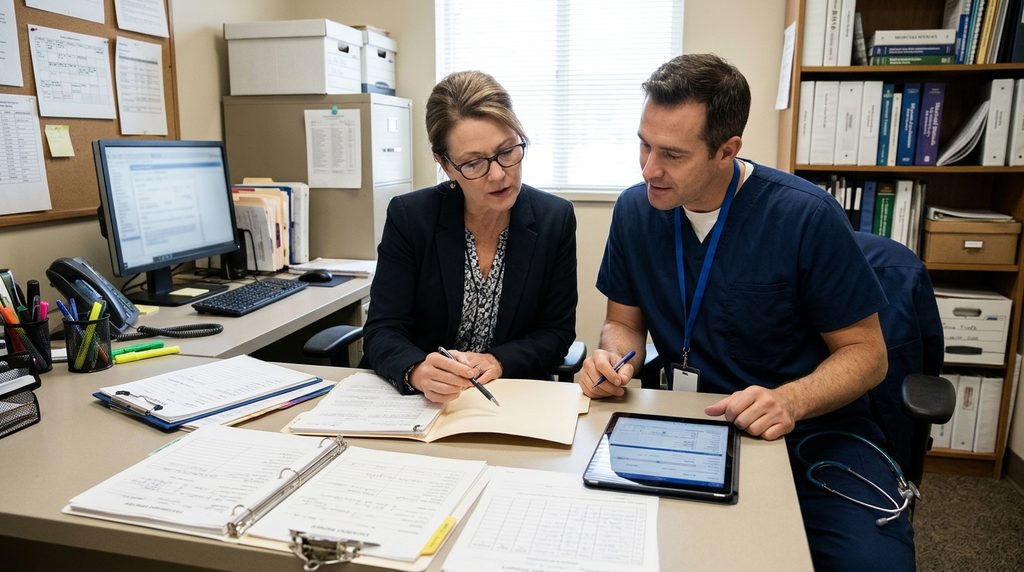
Preserving information promptly is important because staff assignments change, recordings may be overwritten, and relevant witnesses may become harder to locate.
| Evidence | Why It Matters |
| Medical Records | Documents injuries, treatment, and clinical findings |
| Injury Photographs | May establish bruising, abrasions, or other visible harm |
| Resident Statements | Provides the resident’s account of the incident |
| Witness Statements | May independently establish what occurred |
| Surveillance Footage | May show the incident or relevant movements |
| Incident Reports | Documents the facility’s initial response |
| Earlier Complaints | May establish notice of previous misconduct |
| Care Plans | Identifies assessed vulnerabilities and required interventions |
| Behavioral Assessments | May reveal prior aggression by another resident |
| Staff Assignment Records | Identifies who was responsible for care or supervision |
| Personnel and Training Records | May become relevant to hiring or supervision claims |
| Regulatory Findings | May document established compliance violations |
| Police Reports | Records criminal investigation activity |
| Expert Evaluations | May establish appropriate care standards and causation |
| Financial Records | Supports legally recoverable losses |
Medical Documentation
Medical records may help distinguish recent injuries from existing conditions.
For example, emergency treatment may document the location and extent of injuries after an alleged assault.
A healthcare professional may also identify the need for further evaluation.
Photographs
Photographs can preserve the appearance of visible injuries.
Images should be taken with the resident’s consent or through appropriate authorized procedures, consistent with privacy and dignity.
Resident Statements
A resident’s account may provide important evidence.
The statement should be recorded accurately without pressuring the resident or suggesting answers.
Cognitive impairment does not automatically invalidate a resident’s account.
Surveillance Footage
Some facilities use cameras in hallways, entrances, or common areas.
The availability of recordings depends on the facility and applicable privacy rules.
Surveillance footage may help establish when individuals entered or left a particular area.
Earlier Complaints
Reports of previous incidents may help establish what the facility knew about potential danger.
Relevant information may include earlier accusations, documented aggressive behavior, and the facility’s response.
Staffing and Supervision Records
Records may establish which employees were assigned to the resident or unit when the incident occurred.
Shift reports and supervision logs may reveal whether required procedures were followed.
Regulatory Investigations
Department of Health findings may identify failures to comply with nursing home regulations.
However, regulatory findings do not automatically resolve all elements of a civil damages claim.
Understanding the role of evidence for personal injury claims helps distinguish proof of misconduct from proof that a legally responsible party caused recoverable harm.
What Should Families Do When They Suspect Nursing Home Abuse?
The immediate priority is the resident’s safety and appropriate medical care.
If an assault may be ongoing or the resident is in immediate danger, emergency services should be contacted.
1. Address Immediate Safety Concerns
Take appropriate steps to prevent further potential harm.
When necessary, request immediate assistance from responsible staff or emergency responders.
2. Obtain Medical Evaluation
Medical assessment may be necessary after physical assault, suspected sexual abuse, or unexplained injuries.
The appropriate examination should be determined by qualified healthcare professionals.
3. Listen to the Resident
Allow the resident to describe what happened in their own words.
Avoid repeated questioning that could cause distress or affect the accuracy of later statements.
4. Document Observations
Record the dates, times, visible injuries, relevant statements, and people involved.
Clearly distinguish what was personally observed from what was reported by another person.
5. Preserve Communications
Save relevant messages and written complaints sent to nursing home management.
6. Request an Incident Report
Ask whether the facility has documented the allegation and what immediate protective steps were taken.
7. Identify Witnesses
Collect contact information from people who may have observed the incident.
8. Identify Available Surveillance Footage
Determine whether cameras covered relevant hallways or common areas.
Request appropriate preservation of potentially relevant recordings.
9. Report Suspected Abuse
Serious allegations may be reported to the appropriate regulatory and law enforcement authorities.
A resident or family member does not need to prove civil negligence before submitting a good-faith complaint.
10. Review Available Legal Options
When the resident suffers harm, the medical and facility records may require further legal evaluation.
Different claims have different deadlines.
Where Can Nursing Home Abuse Be Reported in New York?
New York offers several reporting options for suspected abuse or neglect involving nursing home residents.
New York State Department of Health
The New York State Department of Health receives complaints concerning nursing home care and regulatory violations.
The Nursing Home Complaint and Discharge Appeal Hotline is:
1-888-201-4563
Complaints may also be submitted through the official New York nursing home complaint form.
The Department may investigate relevant records, interview witnesses, and determine whether regulatory violations occurred.
New York Attorney General
The New York Attorney General’s Medicaid Fraud Control Unit investigates certain allegations of nursing home resident abuse, neglect, and related misconduct.
The office offers an online complaint process.
Reports concerning suspected criminal abuse may also lead to law enforcement involvement.
Police and Emergency Services
When a resident is in immediate danger or a serious crime may be occurring, contact 911.
Law enforcement and regulatory investigations serve different purposes and may proceed separately.
Long-Term Care Ombudsman Program
New York’s Long-Term Care Ombudsman Program helps residents address concerns about care, dignity, and rights.
The program may assist residents in understanding complaint options and seeking resolution of care problems.
Does Filing a Complaint Replace a Civil Lawsuit?
No.
Regulatory investigations may result in citations, corrective actions, or other enforcement measures.
Criminal proceedings may address individual wrongdoing.
A civil lawsuit concerns legally available remedies for injury.
One proceeding does not automatically establish liability in another.
Can Criminal Charges and Civil Claims Arise From the Same Assault?
Yes.
An incident may lead to a criminal investigation and a separate civil claim.
The proceedings have different purposes and standards.
Criminal Proceedings
Criminal proceedings concern whether a defendant committed an offense defined by criminal law.
Prosecutors generally must prove guilt beyond a reasonable doubt.
The filing of charges does not establish guilt.
Civil Proceedings
A civil claim may address injuries caused by legally actionable conduct.
Depending on the cause of action, the claimant generally must prove the required elements by the applicable civil standard.
A criminal conviction is not ordinarily necessary to pursue a civil negligence claim.
Can a Nursing Home Be Liable Even If an Employee Is Not Convicted?
Potentially, yes.
A facility’s civil responsibility may rest on its own negligent supervision, failure to respond to foreseeable misconduct, or deprivation of a protected resident right.
Those questions may be evaluated separately from the outcome of a criminal case.
Can an Individual Employee Be Sued?
Potentially, yes.
A person who commits a legally actionable assault or battery may face a direct civil claim.
However, intentional tort claims may have shorter filing periods than ordinary negligence claims.
What Compensation May Be Available After Nursing Home Assault or Abuse?
The available compensation depends on the injuries, legal theory, evidence, and applicable law.
Medical Expenses
Recoverable damages may include emergency care, hospitalization, diagnostic imaging, surgery, rehabilitation, and other qualifying treatment.
Physical Pain and Suffering
A resident may experience physical pain from an assault-related injury.
Qualifying civil claims may permit compensation for legally recognized noneconomic harm.
Emotional and Psychological Injury
Abuse may cause anxiety, fear, depression, or other psychological harm.
The extent of recoverable compensation depends on the cause of action and supporting evidence.
Additional Care Costs
An injury may create a need for additional supervision, rehabilitation, or other medically necessary assistance.
Future costs must be supported by appropriate evidence.
Statutory Resident-Rights Damages
Public Health Law § 2801-d includes compensatory damages provisions.
It also permits punitive damages in qualifying cases involving willful deprivation or reckless disregard of protected resident rights.
The statute allows discretionary attorney fee awards when the legal requirements are satisfied.
Wrongful Death Damages
When legally actionable conduct causes a resident’s death, a personal representative may be able to bring a wrongful death action.
New York’s wrongful death framework generally focuses on legally recoverable pecuniary losses suffered by qualifying distributees.
Separate survival or resident-rights claims may involve other damages, depending on the circumstances.
How Long Does Someone Have to File a Nursing Home Assault or Abuse Claim in New York?
Filing deadlines depend on the legal theory.
It is particularly important not to assume that every assault-related claim has the same three-year limitations period.
| Claim Type | General New York Filing Period |
| Ordinary Personal Injury Negligence | Generally three years under CPLR § 214(5) |
| Direct Assault or Battery Claim | Generally one year under CPLR § 215(3), subject to exceptions |
| Medical Malpractice | Generally two years and six months under CPLR § 214-a |
| Public Health Law § 2801-d Claim | Generally three years under CPLR § 214(2) |
| Certain Qualifying Sexual Offense Claims | Special provisions may permit a longer period |
| Wrongful Death | Generally two years after death, subject to exceptions |
| Certain Claims Against Public Entities | Additional notice and shorter deadlines may apply |
What Is the Ordinary Negligence Deadline?
CPLR § 214(5) generally establishes a three-year limitations period for ordinary personal injury negligence actions.
This period may apply to appropriate negligent supervision or failure-to-protect claims.
However, a court evaluates the substance of the allegations rather than relying only on the name assigned to the claim.
What Is the Deadline for Assault or Battery?
Under CPLR § 215(3), ordinary civil claims for assault or battery generally must be commenced within one year.
Certain circumstances may alter the deadline.
For example, CPLR § 215(8) provides additional timing rules when a criminal action has been commenced against the same defendant concerning the incident.
Do Sexual Assault Claims Have Different Deadlines?
Potentially, yes.
New York CPLR § 213-c provides a 20-year filing period for claims involving specified qualifying sexual offenses.
Not every allegation of sexual misconduct falls within that provision.
New York’s Adult Survivors Act separately established a temporary revival window for certain previously time-barred adult sexual abuse claims. That statutory window has expired and should not be treated as generally open in October 2026.
A claim involving sexual assault requires analysis of the particular alleged conduct and applicable statutes.
What Is the Medical Malpractice Deadline?
CPLR § 214-a generally establishes a two-year-and-six-month period for medical malpractice actions, subject to applicable exceptions.
This period may matter when the allegations concern professional clinical judgment or treatment.
What Is the Public Health Law § 2801-d Deadline?
Claims under Section 2801-d generally involve the three-year period applicable to certain statutory liabilities under CPLR § 214(2).
The accrual date and other procedural circumstances must be evaluated individually.
What Is the Wrongful Death Deadline?
Under EPTL § 5-4.1, a wrongful death action generally must be commenced within two years after death.
Special provisions may apply in certain circumstances, including some cases involving criminal proceedings.
Why Is Early Evidence Preservation Important?
Surveillance recordings may be overwritten, staff members may leave, and physical injuries may heal before they are fully documented.
Prompt action can help preserve relevant evidence even when the applicable filing deadline is much later.
What Mistakes Can Weaken a Nursing Home Abuse Injury Claim?
Certain mistakes may make it harder to establish the circumstances, legal responsibility, and damages.
These include:
- Failing to address an immediate safety threat
- Delaying appropriate medical assessment
- Not preserving the resident’s original account
- Overlooking photographs of visible injuries
- Failing to identify potential witnesses
- Allowing available surveillance footage to be overwritten
- Not documenting prior complaints
- Overlooking earlier resident-on-resident aggression
- Failing to preserve relevant staffing records
- Assuming an employee’s misconduct automatically establishes facility liability
- Assuming a criminal accusation establishes civil negligence
- Failing to distinguish staff misconduct from resident-on-resident assault
- Overlooking physician-patient privilege and other record protections
- Assuming every regulatory violation automatically proves damages
- Confusing ordinary negligence with medical malpractice
- Failing to identify a protected right under Public Health Law § 2801-d
- Assuming every abuse-related lawsuit has a three-year deadline
- Delaying review of a potential intentional assault or sexual offense claim
A well-supported claim requires reliable evidence of the conduct, relevant legal obligations, causation, and resulting injury.
When May Legal Guidance Be Useful?
Legal guidance may be particularly important when a nursing home resident suffers significant physical injuries, sexual abuse, repeated intimidation, psychological harm, or death following an alleged assault.
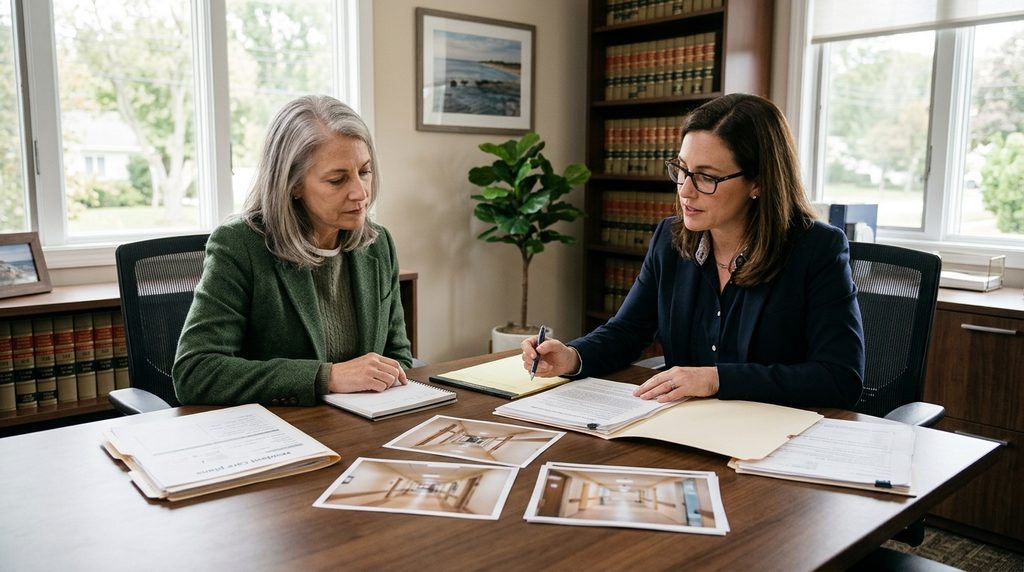
Additional investigation may be necessary when facility management disputes what happened, denies knowledge of earlier complaints, or argues that an employee acted independently for personal reasons.
Resident-on-resident assault claims may also require detailed analysis of prior aggressive behavior, risk assessments, supervision records, and foreseeable danger.
Complex cases may involve facility ownership, corporate relationships, employees, outside personnel, medical providers, and regulatory agencies.
A legal investigation may require medical documentation, incident reports, photographs, surveillance recordings, personnel records obtained through proper procedures, and expert testimony.
People researching local legal assistance may review a Farmingdale legal office location when seeking information about nursing home assault and abuse injury claims in Nassau or Suffolk County.
Every claim requires an individual assessment, and an allegation of misconduct does not automatically establish liability or guarantee compensation.
Frequently Asked Questions About Nursing Home Assault and Abuse Claims
Can a family sue a nursing home if a staff member assaults a resident?
Yes, in certain circumstances. A facility may face a claim when its own negligent hiring, supervision, retention, or other legally actionable conduct contributes to the assault. Vicarious liability may also be considered when the employee’s conduct falls within the scope of employment. The evidence and applicable legal theory determine responsibility.
Is a nursing home responsible if one resident attacks another?
Potentially, yes. A nursing home may face liability when it fails to take reasonable precautions against a foreseeable assault. Prior threats, documented aggression, earlier altercations, and supervision records may be important. However, a facility does not automatically become liable for every sudden or unexpected incident involving residents.
Can nursing home abuse be reported without visible physical injuries?
Yes. Suspected physical, sexual, verbal, or mental abuse may be reported even when visible injuries are absent. New York and federal requirements address abuse prevention, reporting, and investigation. A civil damages claim requires proof of legally compensable harm under the applicable cause of action, which may include qualifying emotional injury.
Can a nursing home abuse lawsuit proceed without criminal charges?
Yes. Civil liability and criminal prosecution are separate. A negligence or resident-rights claim may proceed when the evidence establishes the relevant legal elements, even if prosecutors do not bring criminal charges. However, neither an allegation nor a regulatory complaint automatically establishes that the nursing home is liable.
How long does someone have to sue for nursing home abuse in New York?
The deadline depends on the claim. Ordinary negligence and Public Health Law § 2801-d actions generally have three-year periods, while direct assault or battery claims generally have a one-year period. Medical malpractice and qualifying sexual offense claims may have different deadlines. Wrongful death actions generally have a two-year period.
Conclusion
Nursing home assault and abuse injury claims in New York require careful investigation because residents are entitled to protection from mistreatment while facilities are not automatically liable for every unexpected act of violence.
Potential claims may involve employee misconduct, negligent hiring or supervision, failure to respond to known aggressive behavior, or deprivation of protected resident rights. The applicable legal duties depend on the person involved, the facility’s knowledge, and the circumstances.
New York Public Health Law § 2801-d provides an additional legal framework for injuries resulting from deprivation of qualifying resident rights. Federal regulation 42 CFR § 483.12 also establishes requirements concerning protection from abuse, reporting, and investigation.
Court and administrative decisions demonstrate why prior complaints, foreseeable danger, incident records, staff responsibilities, and proof of causation are important.
Medical documentation, photographs, resident statements, surveillance footage, incident reports, and appropriate expert evaluations may help establish what occurred and whether the facility bears legal responsibility.
Understanding New York’s nursing home safety rules, civil liability principles, reporting procedures, available compensation, and filing deadlines can help residents and families evaluate potential claims using reliable evidence.