
What Makes a Sleeping Bag Worth Buying?
You’re scrolling through a sleeping bag sale online, and suddenly you’re hit with numbers like “850 fill power” and “rated to -20°F.”
But what do these actually mean? Most outdoor gear companies throw around technical terms that sound impressive but leave you guessing about real-world performance.
The truth is simple: quality sleeping bags use specific construction methods and materials that you can identify if you know what to look for.
Let’s break down the three key factors that separate genuine quality from clever marketing.
How Fill Power Numbers Actually Work?
Fill power measures how much space one ounce of down occupies when it’s fully expanded. Higher numbers mean the down traps more air, which creates better insulation with less weight.
Here’s what the numbers really mean:
| Fill Power Range | Quality Level | What You Get |
| 500-600 | Budget | Heavy, less compressible |
| 600-700 | Good | Decent warmth-to-weight ratio |
| 700-800 | Excellent | Light, compressible, durable |
| 800+ | Premium | Top performance, expensive |
Premium down with 800+ fill power costs significantly more because it comes from mature geese and requires careful processing.
You’ll feel the difference immediately when you compress the bag – high-quality down springs back faster and fuller.
But here’s the catch: fill power alone doesn’t determine warmth. A 600 fill power bag with more down can be warmer than an 850 fill power bag with less down. Always check the total down weight, not just the fill power rating.
What Good Baffle Construction Looks Like?
Baffles are the internal walls that keep down from shifting around inside your sleeping bag. Poor baffle design creates cold spots that can ruin your sleep, no matter how expensive the down is.
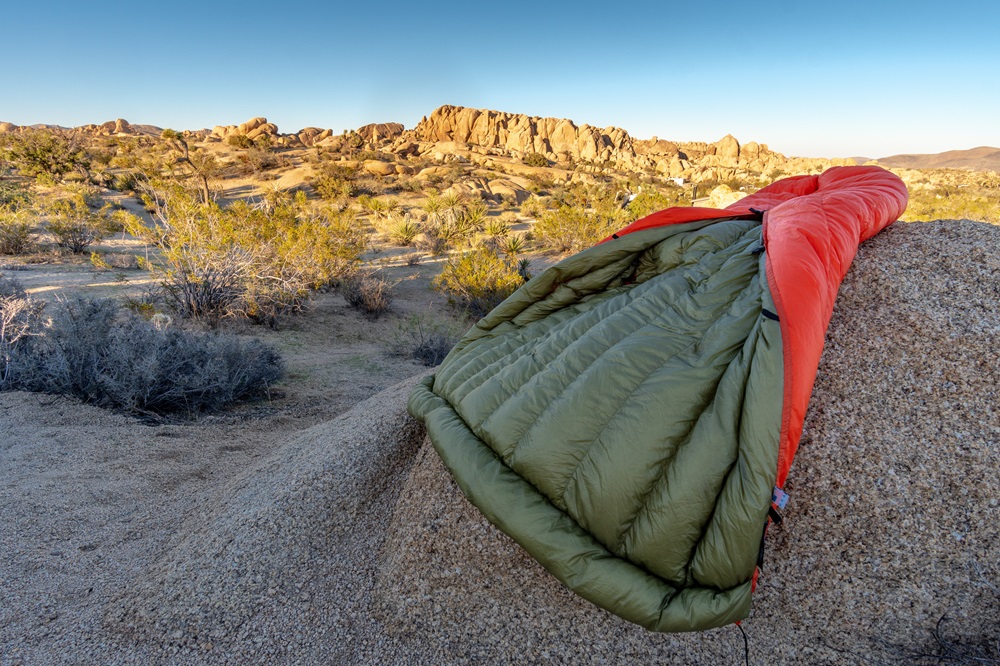
Box baffles create individual compartments that prevent down from migrating. You can feel these as raised squares or rectangles across the bag’s surface. Sewn-through baffles, where the inner and outer fabric connect directly, create thin spots where cold can penetrate.
Quality bags use trapezoidal or triangular baffles that allow down to expand naturally while maintaining even distribution. When you squeeze different sections of a well-made bag, each area should feel equally fluffy.
Vertical baffles run parallel to your body and work better than horizontal ones because they don’t create pressure points when you move. Check the foot box too – cheaper bags often skimp on baffle construction here, leaving your feet vulnerable to cold spots.
How Temperature Ratings Really Work?
Temperature ratings seem straightforward, but they’re based on standardized tests that might not match your real experience. The EN 13537 standard uses three ratings: comfort, lower limit, and extreme.
Comfort rating assumes you’ll sleep comfortably without excessive heat or cold. Lower limit means you can survive the temperature but won’t be comfortable. Extreme rating indicates the lowest temperature where hypothermia risk remains minimal for six hours.
Women typically sleep colder than men, so comfort ratings often reflect women’s thermal needs while lower limits reflect men’s. If you’re a cold sleeper, focus on comfort ratings. If you run warm, lower limit ratings give you a better baseline.
Real-world factors affect these ratings significantly. Your sleeping pad’s R-value, what you wear to bed, your metabolism, and even your hydration level all impact how warm you’ll actually feel.
A bag rated to 20°F might feel cold at 30°F if you’re using a thin sleeping pad or you’re dehydrated.
Red Flags That Signal Poor Quality
Unnaturally cheap prices often indicate synthetic fill marketed as down or low-quality down mixed with feathers. Real 700+ fill power down costs manufacturers significant money – they can’t sell it for bargain prices without cutting corners somewhere.
Vague specifications are another warning sign. Quality manufacturers list exact down weights, baffle types, and fabric weights. If you see terms like “premium down” without specific fill power numbers, stay skeptical.
Heavy weight for the temperature rating suggests either low-quality down or excessive fabric. A quality 20°F bag should weigh between two and three pounds, depending on size.
Making Smart Decisions During Sales
Compare specs across multiple brands rather than focusing on sale prices alone. Download specification sheets and create your own comparison chart with fill power, down weight, total weight, and packed size.
Read recent customer reviews specifically mentioning temperature performance. Look for reviews from people who used the bag in conditions similar to where you’ll camp. Reviews mentioning “slept warm at the rated temperature” or “needed extra layers” give you real-world data.
When you find a sleeping bag sale that looks promising, check the return policy carefully.
Quality outdoor retailers usually offer generous return windows because they’re confident in their products.
Test the bag’s compression if possible. Quality down should compress significantly but spring back to full loft quickly when released. Sluggish recovery often indicates lower-quality fill or moisture damage.
The best sleeping bag combines appropriate temperature rating for your needs, quality down with proper baffle construction, and durable fabrics that resist tears and moisture.
Focus on these fundamentals rather than flashy features, and you’ll find gear that performs reliably for years in real outdoor conditions.
Frequently Asked Questions
What does fill power mean when browsing a sleeping bag sale?
Ans: Fill power measures how much space one ounce of down occupies when expanded. Higher numbers provide better insulation, lighter weight, and improved compressibility for outdoor performance.
Does higher fill power always make a sleeping bag warmer?
Ans: No, warmth depends on both fill power and total down weight. A lower fill power bag with more down can outperform a higher-rated bag with less insulation.
Why is baffle construction important in sleeping bags?
Ans: Baffles keep down evenly distributed to prevent cold spots. Box or trapezoidal designs offer better insulation, while sewn-through construction can allow cold air to penetrate.
How should you interpret sleeping bag temperature ratings?
Ans: Focus on comfort ratings for realistic warmth expectations, since lower limits indicate survivable temperatures, and real-world factors like pads, clothing, and hydration affect overall warmth.
What are red flags to watch for during a sleeping bag sale?
Ans: Extremely low prices, vague specifications, and unusually heavy bags may signal low-quality down, synthetic fill, or poor construction that compromises real-world performance.

Related Posts
Backpacking Tent on Rocky Ground: What Really Happens?

How to Clean Your Travel Daypack?